Malaga or Seville: which southern Spanish city is best for you?

Seville, Spain's fourth-largest city, is one of Europe's most popular city break destinations and Malaga, until recently, was either known just as a port or somewhere you zipped through to get to the Costa del Sol resorts, so surely there is no contest in a head-to-head?
Don't be too hasty, as Malaga* is an ancient city that has been on an epic journey for over 3,000 years. The dynamism of Spain's sixth-largest city has many faces and drives many reinventions. Malaga is a completely different city from the one I first visited during the late 1990s.
The local tourist strapline hails Malaga as the 'All round city', and it really is. This ancient hub, lashed by sea and sun, draped in so much history and romance, today refuses not to be loved too.
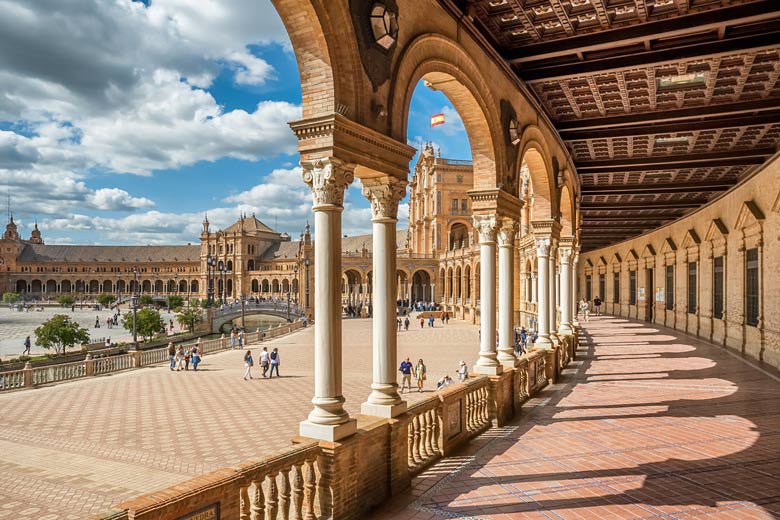
But how will it stack up against a classic old-world city break destination in Seville*? This fellow Andalusian charmer is home to one of the most atmospheric old towns in Europe, which is alive with a Moorish palace and a landmark cathedral.
Swirl in horse-drawn carriages clipping across the cobbles, a river running through it and the fact that the tapas tradition was born here, and this is shaping up to be a tough battle between the two southern charmers.
Getting there: whichever city wins out for you, you'll find lots of lovely offers on holidays to Spain with TUI*, including affordable city breaks*.
The Alcazaba versus the Alcazar
Surely this one is no contest with the Moorish extravagance of the Alcazar, one of Spain's most renowned attractions, easily winning the day for Seville? Enter stage left the rugged 130-metre-high hill of Gibralfaro that looks every bit the foreboding strategic bolthole it served as for centuries.
As you battle upwards, Malaga's Alcazaba unfolds, drifting back to the 11th century. Whilst not as grand as Seville's Moorish cousin, it is still awash with Moorish signature tiles, courtyards and fountains. Plus views.
The latter just gets better and better as you ascend further up to the Castillo de Gibralfaro just above the palace. Malaga's sturdy castle may have been built three centuries later, but it dominates the city and offers its best views.
The Royal Alcazar of Seville is an utter joy too. A palace resplendent in Iberian Mudejar style, it's a riot of gardens, patios and architectural styles, well deserving its place on the UNESCO World Heritage list.
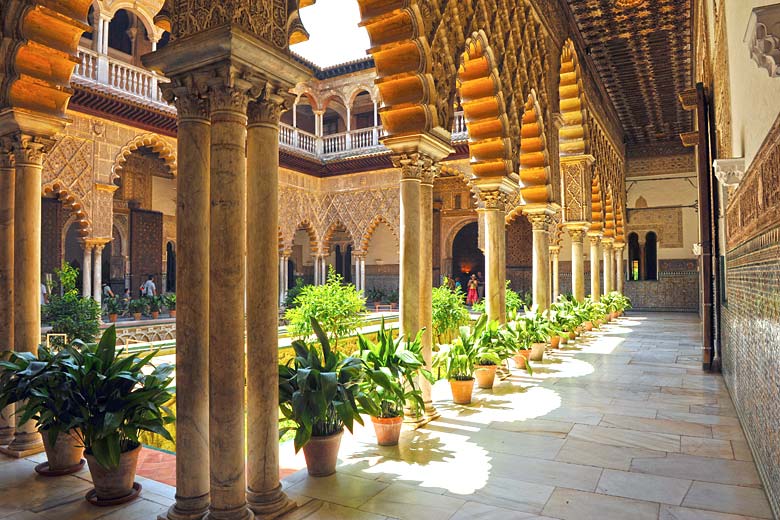
It looks fit for royalty, and it actually is, as it's still an official residence of the Spanish royals. You'd think this would be no contest, but if you count the whole hill of Gibralfaro (with its views, palace and castle), it's a match for Seville's finest, so this one is a high-scoring draw.
Which city centre appeals most?
Malaga's largely pedestrianised, glorious Centro Historic, is where you'll probably spend most of your time. Calle Marques de Larios is the grandest shopping thoroughfare, with some familiar global brands alongside more local stores, but still a world away from faceless malls.
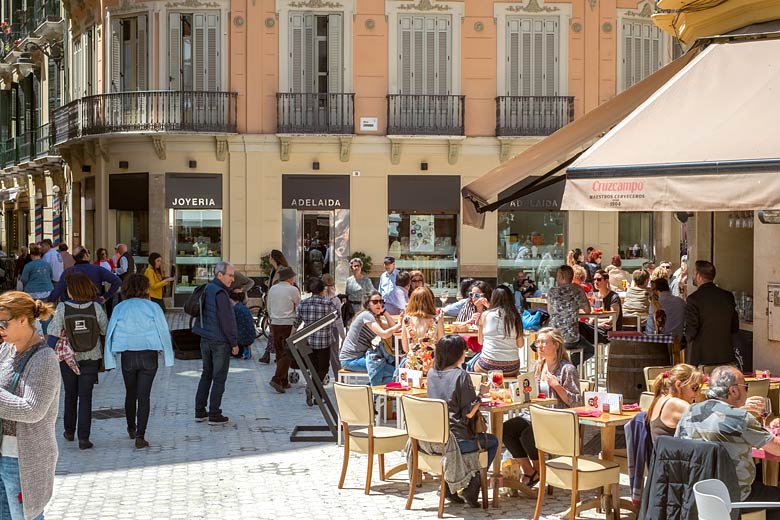
Aimless wandering is the most rewarding pastime, stopping off at Café Aranda by the Atarazanas Market for a fortifying churros snack; they've been serving them since 1932. All roads eventually lead to Malaga's landmark cathedral, striking with its incomplete tower and far more polished interior.
Seville's old core is an utter joy, too. There is, of course, the hulking cathedral, which shares the UNESCO World Heritage designation along with the Alcazar. It's (Seville orange-flavoured surely?) one of the great set pieces of Spain*.
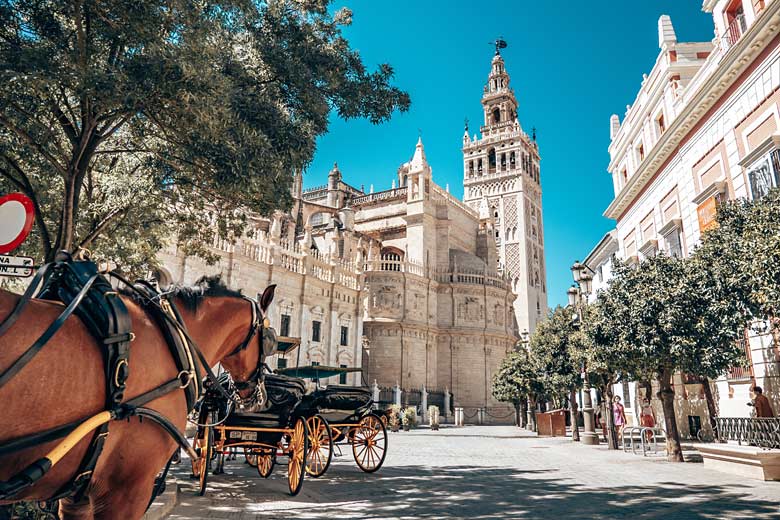
Church spires abound next to glorious mansions, which echo back to the golden days when the city's river bustled with ships from all over the world. For sheer unbridled historic romance, I'm going to give this one to sultry Seville.
The Mediterranean versus the Guadalquivir
Stroll from the Centro Historico through the palm-fringed Parque de Malaga and you'll find a waterfront totally transformed. Serious cash has been ploughed into a leisure oasis: Muelle Uno, which is alive with shops, bars, restaurants (including one with a Michelin star), tour boats and walkways.
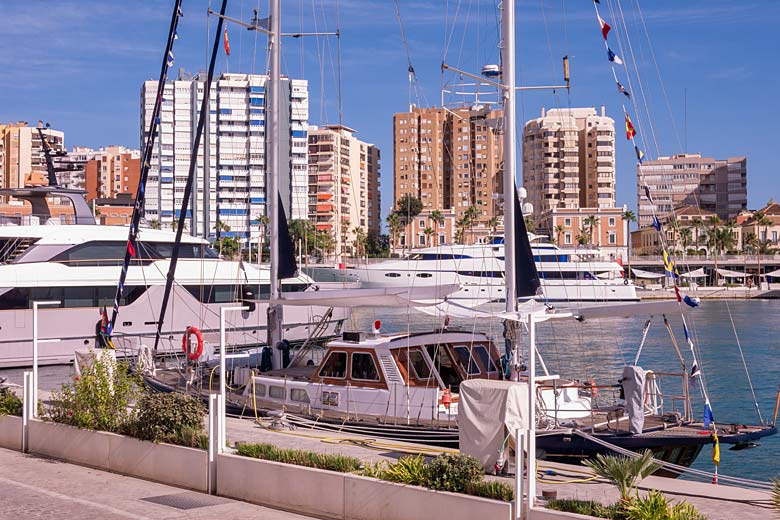
It looks swish, and the millionaire yachts do not look out of place in Malaga's riposte to glitzy Marbella. East and west of here, a line of beaches that show just why the Costa del Sol* is so popular and so accurately named. A boat tour of the brilliantly revamped waterfront is essential.
Seville does not have the Med, and no longer can ships from all over the world haul up the silted-up Guadalquivir River. Saying that, the section in the heart of Seville chimes perfectly with the historic grandeur of the old town. Seville's spires are mirrored in the river's reflections, and the paths along the river have been greatly improved in recent years.
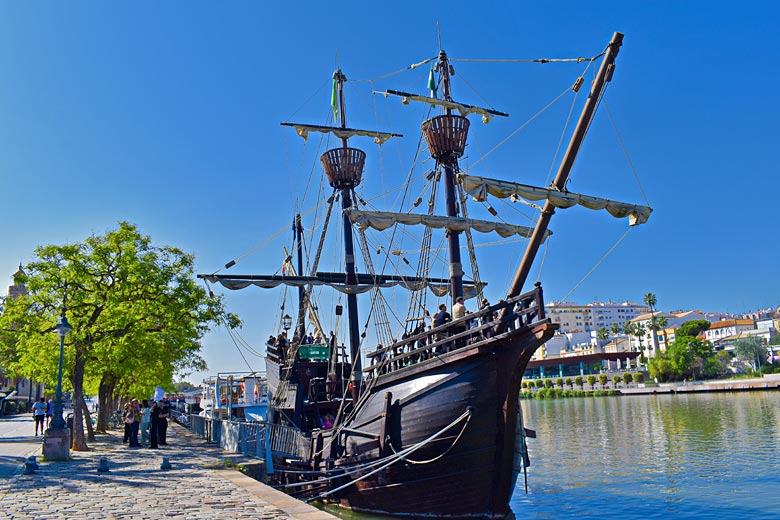
And in the Torre del Oro, there is an eye-catching focus, an old watchtower beacon radiating deep into the city's past. Across the river from the old town, the historic flamenco houses of Triana stand in the home of flamenco. A night here wrapped in the ancient Andalusian rhythms is one you'll never forget.
I'm tempted to give this to Seville on the strength of flamenco alone, but in the cold light of day (and in the shimmering sunset), Malaga's swish palm-fringed, beautifully revamped waterfront takes the win.
Culture wars
Malaga's cultural scene bursts alive with over 30 museums and galleries. The city is very proud of its most famous son, painter Pablo Picasso, who was born in Malaga in 1881. If you visit one Picasso site, make it the eponymous museum; it's a full day for Picasso devotees and still a joy for the not-yet converted.
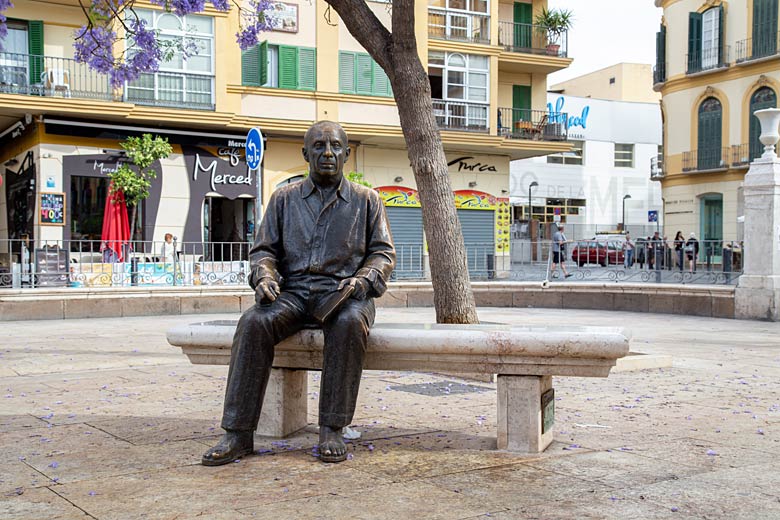
The landmark CAC Malaga modern art gallery is currently being reinvented with a massive revamp and is slated to reopen by the end of 2026. The future of the striking Centre Pompidou (that multi-coloured cube on the waterfront is part of it) has recently been secured too in a city that adores its avant-garde art.
For families, or retro games fans, the OXO Museo del Videojuego is brilliant, with three floors of games you can actually play as the story of gaming is told along the way. Nice rooftop bar with views of the cathedral, too.
Seville also has lashings of galleries and museums. The Archaeological Museum, which is being given a major spruce in for 2026, delves deep into the city's backstory, while the Museum of Fine Arts, housed in a gorgeous old convent, sweeps through Andalusian and Spanish art right up to the 20th century; it's second of its kind only to Madrid's Prado.
There is, of course, also a museum dedicated to flamenco. Niche contenders include Triana's Ceramics Museum, which preserves the tradition of the old workshops. Meanwhile, the Regional Military Museum, dramatically housed on the Plaza de España, has an unusual gas mask designed for a horse.
For the vibrancy of its modern art and with that mercurial man (Picasso) fighting its corner, it is narrowly Malaga on this one.
Who wins the fiesta of food & drink?
Malaga's dining scene has mirrored the city's transformation. Alongside vintage tapas bars and 'sherry' (only wines from Jerez bear that name; Malaga's sweet wines are excellent too) joints with barrels lining the walls, there is a new wave of hipster haunts.
Atarazanas Market neatly showcases the contrasting sides of Malaga, where matcha lattes rub shoulders with local beer Vittoria; pil pil prawns star next to equally delicious crab bao buns.
Michelin is a big fan of Malaga these days, too: Blossom, Kaleja and José Carlos García all sport Michelin stars, with a whole host of Bib Gourmand and Michelin-recommended restaurants backing them up.
What then of Seville? The city gave the world tapas, and for that we can all be thankful. The legend goes that tapas was invented when bars started putting lids on sherry glasses to keep out the flies. Different bars popped various snacks on the lids, and so tapas was born.
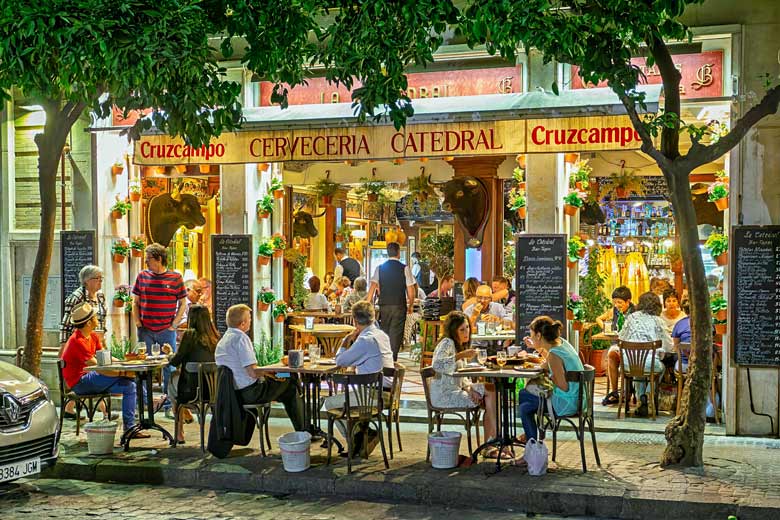
There is just nowhere better in the world to enjoy tapas in Seville than in one of the bars where they reckon the tradition started: El Rinconcillo has proudly served tapas since before Captain Cook sailed for Australia. Since 1670!
And the menu is little changed with the likes of chorizo, tortilla and the ever-delicious Jamón Iberico. So, for cool modern restaurants and rising Michelin stars, it's Malaga; for tapas, Seville. A very honourable tie here.
Hotel haven
A flurry of new hotels has opened or revamped as Malaga's tourism enjoys a boom that shows no signs of letting up. The most impressive revamp is the Palacio Solecio.
This 18th-century palace is today a remarkable bolthole right in the heart of the Centro Historico. Rooms are sumptuous and traditional, service is sublime, and there is even a modest rooftop pool with sun loungers peering out over Malaga's rooftops.
The Balausta restaurant is excellent too, with the likes of delicious garlic prawn croquettes, followed by tagliatelle alive with lobster and mushrooms, plus a superb choice of wines from Andalusia.
Coming down a notch in price point and luxury level is the Hotel NH Malaga, which has a decent restaurant, Tablafina, serving Andalusian tapas and more substantial meat and fish dishes.
If you want to escape the summer heat and crowds, head for the hills to Finca la Bobadilla, a half-hour drive away. Think horse-riding in the vineyards, top-notch spa treatments and Michelin-starred dining.
Seville is no slouch on the hotel front either, and, full disclosure, Hotel Alfonso XIII is one of my favourite hotels in Spain. Built in 1929, this grand dame exudes tradition, refinement and relaxation. It looks and feels palatial, with a swimming pool right in the heart of the city next to the cathedral.
Forget any reservations about the name, the CoolRooms Palacio de Villapanés is a brilliant place to stay for couples in an 18th-century palace that could scarcely be more Seville.
Right in the heart of the old town, we're talking marble and parquet floors in a proper cosy, life-affirming bolthole for two. Both cities have real strength in depth in hotels, so it's an impressive draw again.
And the winner?
Well, who would have thought it? The young city break upstart (a very old city in itself) just shades what to some will be an unlikely victory for Malaga.
It was close, and both cities remain exceptional destinations, but next time you are casting your booking fingers towards Andalusia, seriously consider Malaga.
Arguably, for the best Andalusian break*, you could arrive in one and then depart from the other, then you get the best of both glorious worlds.
Compare weather
Malaga vs Seville
Maximum daytime temperature (°C)
Hours of sunshine per day
Days with some rainfall
Monthly rainfall (mm)
The above graphs compare the climate in Malaga with the climate in Seville. Find out more about conditions across the country in our complete guide to the climate in Spain.
Decided where you're going first? Check out the latest offers on city breaks and holidays with TUI.

More about the Malaga





Malaga by month
Jan Feb Mar Apr May Jun Jul Aug Sep Oct Nov Dec
More about the Seville
Seville by month
Jan Feb Mar Apr May Jun Jul Aug Sep Oct Nov Dec
Explore holiday destinations
- Beach holidays
- City breaks
- Family holidays
- Half term holidays
- Spring holidays
- Summer holidays
- Autumn holidays
- Winter sun holidays
- Honeymoons
- Coolcations
- Compare places
- Ski resorts
Save with latest deals & discounts
- Holiday offers
- Top travel brands
- Airlines & flights
- Discount hotels
- TUI
- Jet2holidays
- Neilson
- Marella Cruises
- Holiday Extras
- Pierre & Vacances
- Caledonian Travel
- Club Med
Airport parking
- Manchester Airport
- Stansted Airport
- Bristol Airport
- Luton Airport
- Birmingham Airport
- Edinburgh Airport
- Gatwick Airport
- Glasgow Airport
- Newcastle Airport
Airport lounges
- Manchester Airport
- Birmingham Airport
- Bristol Airport
- Edinburgh Airport
- Glasgow Airport
- Heathrow Airport
- Newcastle Airport
- Stansted Airport
- Gatwick Airport
Be inspired
Get your weekly fix of holiday inspiration from some of the world's best travel writers plus save on your next trip with the latest exclusive offers
We promise not to share your details