8 of the best & most bonkers festivals in France

The French love a party, and France's festival calendar is packed with no fewer than 6,000 weird and wonderful annual events.

Confréries (brotherhoods) are responsible for many of the most niche festivals. These societies unite people with a shared passion, often around a very specific food type. There are onion brotherhoods, garlic brotherhoods, and even the brotherhood of tripe sausages (andouillette).
But it's not just food that unites the French for a good old knees up. This is a country where 'patrimoine' (heritage) is of the utmost importance, and many festivals are several centuries old. France, with its long lunch breaks, Sunday closures and plenty of public holidays, takes its festivals seriously.
Where to stay: find your ideal, great value home-from-home in France with Pierre & Vacances*, which offers all sorts of self-catering accommodation across the country.
The Catalan Bear Festival
Not one festival, rather a trio of festivals celebrated in the Pyrenees for three weekends each February, the Bear Festivals are all based on the same stories and traditions which play out slightly differently in three different villages.
Centred around the legend of Jean l'Ours (John the Bear), the story tells of a half-man, half-bear who is hunted for abducting local women, who manages to regain his humanity.
The villages of Arles-sur-Tech, Prats-de-Mollo-la-Preste and Saint-Laurent-de-Cerdans each have a different bear outfit, and festival-goers follow the 'bear' around town to the soundtrack of Catalan bands.
One looks like bad taxidermy, one is covered in soot and tar, and one is pretty realistic. It was even inscribed on the UNESCO World Heritage List in 2022.
The Bird King Festival
Time seems to have stood still in Le Puy-en-Velay, the start of France's main pilgrimage route to Santiago de Compostela in Spain.
Never does it feel more medieval, though, than during the Bird King Festival (Fête du Roi de l'Oiseau), on the third weekend of September.
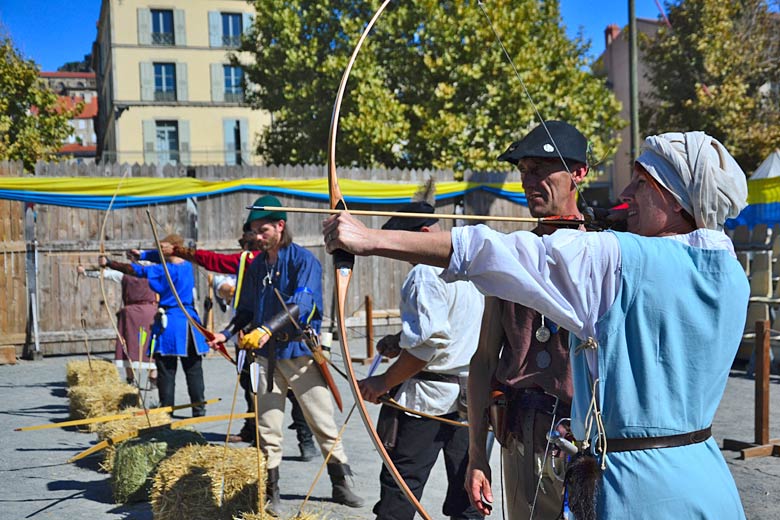
It first took place in 1533, and was originally just an archery contest, and the winner, crowned King of the Birds, received a year's exemption from paying taxes.
There are still archery contests during the four-day festival, although the prizes are sadly much more modest than a tax-free year. On the agenda is medieval music and dancing, vast traditional crafts fairs, outfits that would be the envy of a Netflix period drama, and a whole lot of hypocras (sweetened, spiced wine).
The Espelette Chilli Pepper Festival
It's ironic that a country that eschews spicy food has its very own chilli pepper, which comes from the town of Espelette in the Basque Country.
Celebrated in late October, after the harvest, the whitewashed Basque houses with their red shutters get an extra splash of red: long lines of drying chilli peppers.
Basque music is played in the streets, chilli pepper-themed dishes are served at restaurants and street food stands, and there's traditional dance and meals at long communal tables al fresco. The Brotherhood of the Espelette Chilli Pepper is, naturally, out in force.
Dunkirk Carnival
Three things mark Dunkirk's Carnival as extraordinary. One is that it lasts for almost three months from January to April, with the busiest period being Les Trois Joyeuses (the Sunday, Monday and Tuesday directly before Ash Wednesday).
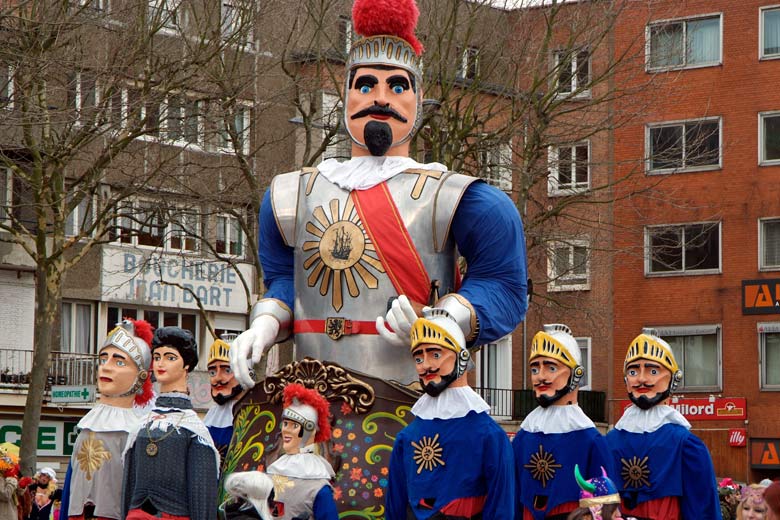
The second is the giants: enormous sculptures of mythical creatures and personalities from local legends, which always appear in processions in northern France and Belgium.
The third and final particularity, and undoubtedly the oddest, is that hundreds of kilos of herring are thrown into the crowd, making it easily the stinkiest carnival in France. Fancy dress rules apply: go hard or go home.
St Nicolas Day
While most of France celebrates Christmas, St Nicolas Day, on 6 December, is just as important in eastern France. In Lorraine, St Nicolas is accompanied by a threatening-looking figure armed with a whip.
Père Fouettard (Father Flog) is there to whip naughty children, although since France's child protection laws are thankfully not medieval, he actually just gives them coal and turnips.
Whipping is nothing compared to the story of the cannibal butcher, projected on buildings throughout the region (head to Nancy for the biggest sound and light show, on Place Stanislas).
When three lost children knocked on the butcher's door one night, he chopped them up and put their dismembered bodies to salt for seven years, when St Nicolas turned up and resuscitated them.
The Music Festival
Wherever you are in France, if it coincides with the summer solstice (the 20, 21 or 22 of June) it's difficult to miss the countrywide music festival La Fête de la Musique.
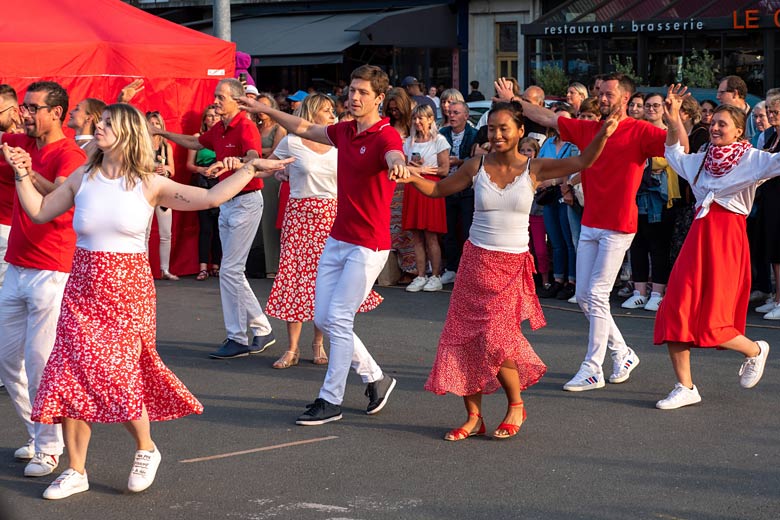
It was first organised by Jack Lang, Minister for Culture, in 1982, and is completely free. Buskers, bands and singers of all levels take to the streets in what can only be described as a giant, open-air party. In larger cities, artists of international renown often give free concerts.
Roman Days in Nîmes
Before Nîmes came Nemausus, an important Roman city with a colosseum used for entertainment and gladiator fights. Les Journées Romaines, a four-day festival each April, brings the city's colosseum back to its original use, with reenactments in full fancy dress.
The esplanade is taken over by a Gallo-Roman village, and activities include everything from falconry displays to workshops to make your own Roman headband from laurel leaves.
The Bayonne Festival
The Bayonne Festival (Le Fêtes de Bayonne) is now so popular that around 1.5 million visitors descend upon the town for its four-day duration in mid-July. It's a boozy one, which has led to it getting a reputation as a giant piss-up, and was started by a group of rugby players in 1932.
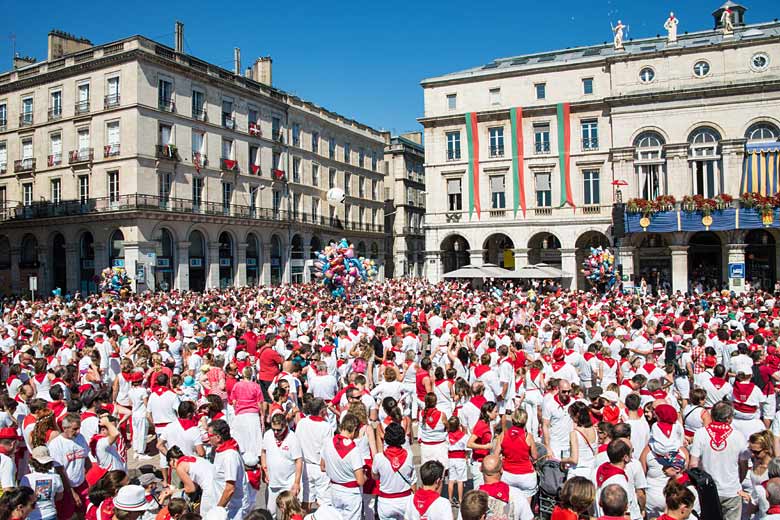
However, it's also France's largest celebration of Basque culture, and features Basque games such as pelota (think: squash played using a hollowed out boomerang), a cow race through the streets and open-air concerts. People wear traditional colours (white with a red scarf) and the parties generally last all night.
Climate in France
| Jan | Feb | Mar | Apr | May | Jun | Jul | Aug | Sep | Oct | Nov | Dec | |
|---|---|---|---|---|---|---|---|---|---|---|---|---|
| Maximum daytime temperature °C |  6 6 |
7 |
 11 11 |
 14 14 |
 18 18 |
21 |
 24 24 |
 23 23 |
20 |
 16 16 |
10 |
7 |
| Hours of sunshine (daily) | ||||||||||||
| Days with some rainfall |  17 17 |
 14 14 |
16 |
15 |
15 |
13 |
 11 11 |
12 |
12 |
14 |
15 |
16 |




The above guide shows the climate in Paris. Find out more about conditions across the country year-round in our complete guide to the climate in France.
Ready to experience a French festival? See the latest offers on affordable self-catering rentals across France with Pierre & Vacances.

More about France





France by month
Jan Feb Mar Apr May Jun Jul Aug Sep Oct Nov Dec
Explore holiday destinations
- Beach holidays
- City breaks
- Family holidays
- Half term holidays
- Spring holidays
- Summer holidays
- Autumn holidays
- Winter sun holidays
- Honeymoons
- Coolcations
- Compare places
- Ski resorts
Save with latest deals & discounts
- Holiday offers
- Top travel brands
- Airlines & flights
- Discount hotels
- TUI
- Jet2holidays
- Neilson
- Marella Cruises
- Holiday Extras
- Pierre & Vacances
- Caledonian Travel
- Club Med
Airport parking
- Manchester Airport
- Stansted Airport
- Bristol Airport
- Luton Airport
- Birmingham Airport
- Edinburgh Airport
- Gatwick Airport
- Glasgow Airport
- Newcastle Airport
Airport lounges
- Manchester Airport
- Birmingham Airport
- Bristol Airport
- Edinburgh Airport
- Glasgow Airport
- Heathrow Airport
- Newcastle Airport
- Stansted Airport
- Gatwick Airport
Be inspired
Get your weekly fix of holiday inspiration from some of the world's best travel writers plus save on your next trip with the latest exclusive offers
We promise not to share your details