The Dordogne or the Loire Valley: which should you choose?

Pitting the Dordogne against the Loire Valley is essentially putting my childhood camping holidays against each other.
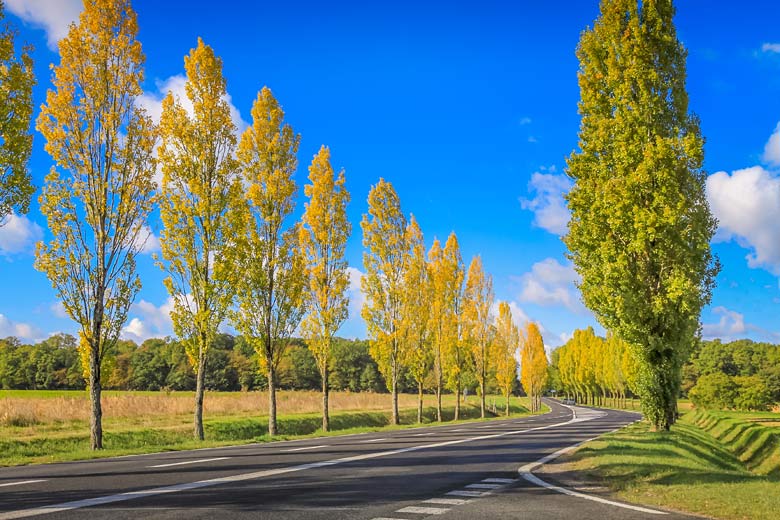
We'd catch the night ferry from Plymouth to Roscoff and trundle down the west coast, either continuing our mission to test every Eurocamp* site in western France*, or crawling down the motorway with a massive trailer tent in tow.
As a child, I was much more interested in the campsite activity line-up: aquagym, line dancing or even bingo. I doubt I appreciated the hundreds of châteaux, steeped in centuries of history. I certainly didn't appreciate the 30 AOC wines found cumulatively across the two regions.
Châteaux, vineyards, meandering rivers... on paper, the Dordogne and Loire Valley look pretty similar, so which should you choose for your trip? I've gone back many times as an adult, eschewing campsite line dancing, to break it down for you.
Where to stay: find great value offers from Pierre & Vacances* on self-catering accommodation and holiday parks in both the Dordogne* and the Loire Valley*, as well as elsewhere across France.
Châteaux
You're spoilt for choice either way. The Dordogne is famously referred to as the land of a thousand and one castles, and whilst this is somewhat exaggerated (there are just over 600), that would still give you almost two years of visits on a château-a-day model.
Many of the châteaux were built in the Middle Ages, and they were built with purpose. During the Hundred Years' War (1337 to 1453; yes, it lasted longer than 100 years), England and France fought to control southwest France, and many of the Dordogne's castles were built during this time as fortifications.
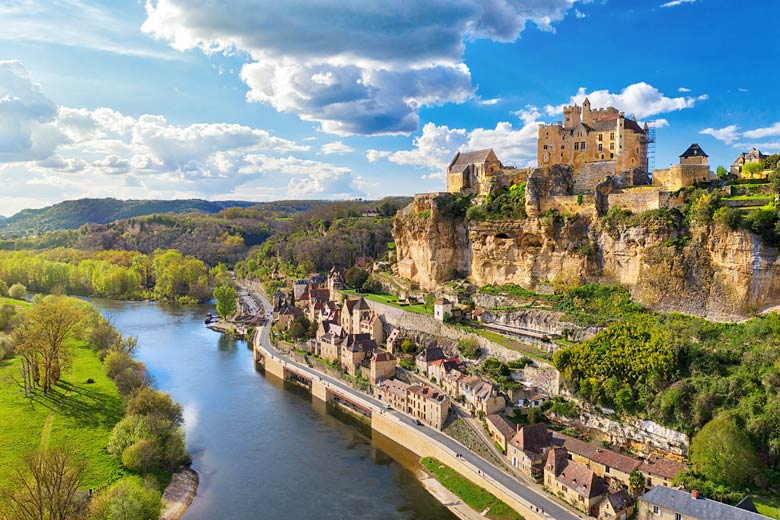
With all this English history, it's not surprising that many of the castles remind me of English Heritage properties I used to visit when I was small, brandishing a wooden sword from the gift shop. I love the 13th-century Château de Puymartin, said to be haunted by the ghost of a White Lady (although sightings may well be the resident barn owls).
It's great for kids, with some delightfully creepy dungeons. The 12th-century Château de Beynac has one of the most beautiful locations, right above the Dordogne River.
The Loire's châteaux are palatial in contrast. If you've got delusions of grandeur, or if you like your gold-gilding served with a side of more gold, these are for you. During the 15th and 16th centuries, the French royal family didn't live in Paris or Versailles, but here in the Loire Valley*.
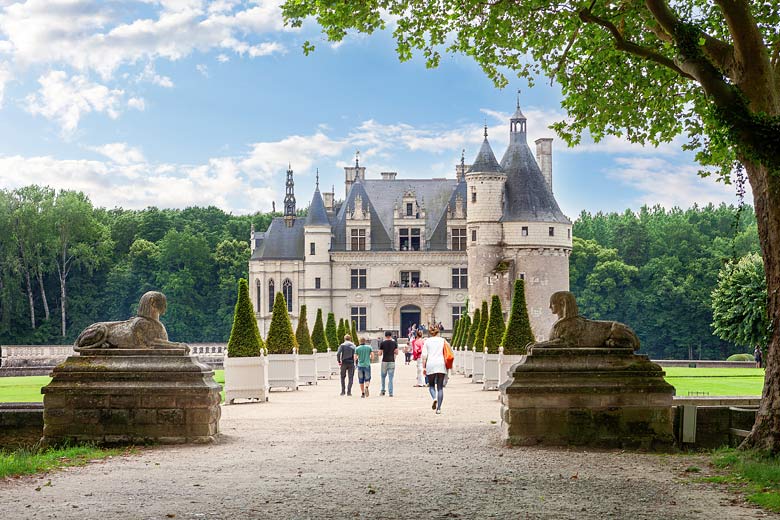
Unlike the Dordogne, these castles were built for aesthetics rather than functionality. The 100 turrets of Château de Chambord would have done nothing to stop invaders (although Rapunzel would have had the choice of where to let down her hair).
It would have been easy to breach the walls of Château de Chenonceau, a five-arched castle-bridge straddling the River Cher, and Azay-le-Rideau floats in the middle of an artificial lake, rather than an imposing moat.
Kayaking & cycling
It's impossible to put a pedal, or paddle, wrong, whichever you go for. The Loire Valley is flatter for cyclists, with easy château-to-château routes that can be punctuated with plenty of wine tastings.
The Dordogne* makes for sportier bike rides with its valleys and limestone plateaux, although most of the hills are definitely what people would describe as rolling, rather than the gnarly climbs you've seen during the Tour de France.
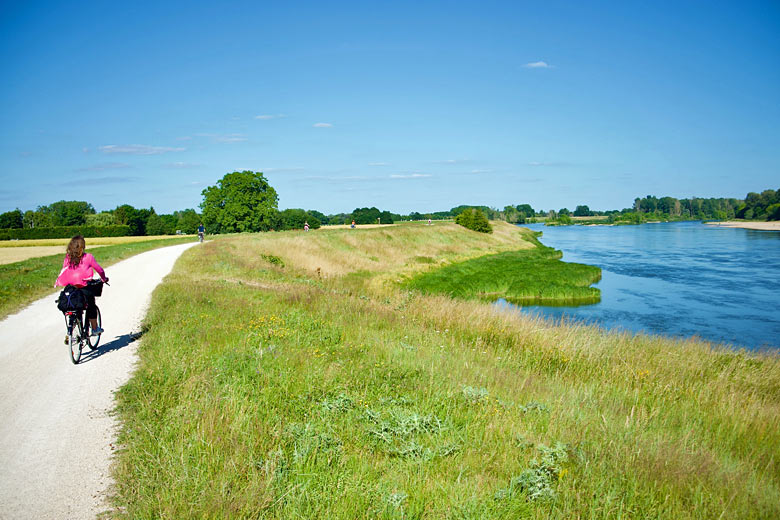
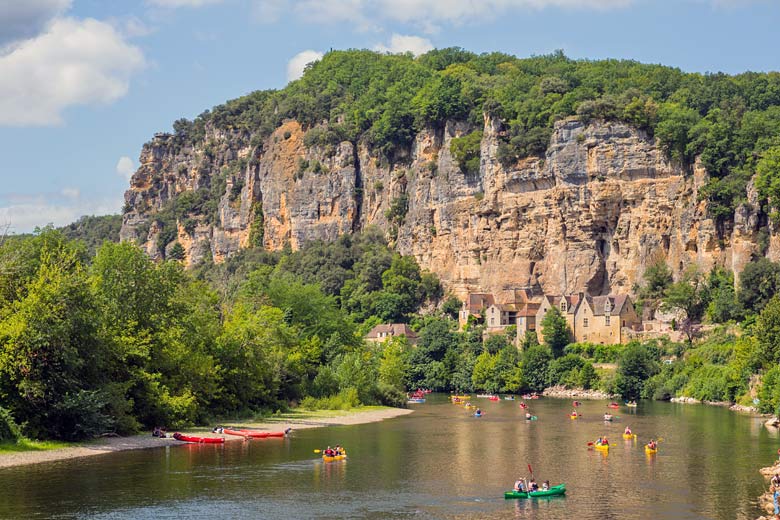
Both regions are also fantastic for kayaking. The rivers Loire and Vienne in the Loire Valley are wider and shallower with a slower current. They're better suited to flat-bottomed kayaks and canoes than anything with a fin.
The Dordogne is deeper and faster moving. On the Vézère River, which cuts through the northwestern part of the Dordogne, you can even go white water rafting on Grade III rapids.
Food & drink
Whichever you choose, you won't go thirsty. Both regions are exceptionally well known for their wine: the Loire Valley has 17 AOC wines, just ahead of the Dordogne's 13 AOCs.
Whites make up the bulk of production in the Loire Valley, chiefly Chenin Blanc and Sauvignon Blanc, although there are plenty of reds grown around Chinon, particularly Cabernet Franc. Chinon is a great place to potter around cute little neighbourhood wine bars hidden down cobbled streets, and it also has some excellent second-hand bookshops.
Wine in the Dordogne has long been overshadowed by its famous neighbour: Bordeaux. Passing under the radar, though, has meant that winemakers in the Dordogne have been freer to experiment, and lots of small-scale producers make organic and biodynamic vintages.
The Dordogne is also the home of Monbazillac, one of the most famous sweet, dessert wines in the world.
On a plate, the Dordogne is extremely duck-heavy, and many of the towns sit firmly on the foie gras route (you'll see it on sale everywhere in Sarlat-la-Canéda, particularly at its biweekly market on Wednesday and Saturday mornings). Vegetarians often have a hard time, although the truffles are some of the finest in the country.
The Loire's culinary specialities are more in line with classic French cuisine, and include dishes like tarte tatin, goats' cheeses, pralines and, conversely, more than 50% of France's misnamed champignons de Paris (Parisian mushrooms) production. Speaking from experience, vegetarians eat better here.
Getting there
If coming by road from the UK, the Loire is a much shorter drive once you cross the Channel. By train, it's a 75-minute TGV (high-speed train) from Paris to Tours, and Tours Airport has direct flights to London and Dublin.
From most of the UK, it takes two or three hours longer to reach Périgord or Bergerac in the heart of the Dordogne than it does to get to major cities like Tours and Orléans in the Loire.
TGV services from Paris also don't stop here, going instead to Bordeaux, an hour's drive from the Dordogne. Bergerac Dordogne Périgord Airport, however, has plenty of cut-price flights to heaps of UK cities in summer, including Bristol, Edinburgh and Leeds.
Compare weather
Bergerac vs Tours
Maximum daytime temperature (°C)
Hours of sunshine per day
Days with some rainfall
Monthly rainfall (mm)
Use the graphs above to compare the climate in Bergerac and the climate in Tours. Find out more about conditions across the country in our complete guide to the climate in France.
Made your choice? Don't miss the current online offers from Pierre & Vacances on self-catering accommodation and holiday parks.

More about Dordogne





Dordogne by month
Jan Feb Mar Apr May Jun Jul Aug Sep Oct Nov Dec
More about Loire Valley
Loire Valley by month
Jan Feb Mar Apr May Jun Jul Aug Sep Oct Nov Dec
Explore holiday destinations
- Beach holidays
- City breaks
- Family holidays
- Half term holidays
- Spring holidays
- Summer holidays
- Autumn holidays
- Winter sun holidays
- Honeymoons
- Coolcations
- Compare places
- Ski resorts
Save with latest deals & discounts
- Holiday offers
- Top travel brands
- Airlines & flights
- Discount hotels
- TUI
- Jet2holidays
- Neilson
- Marella Cruises
- Holiday Extras
- Pierre & Vacances
- Caledonian Travel
- Club Med
Airport parking
- Manchester Airport
- Stansted Airport
- Bristol Airport
- Luton Airport
- Birmingham Airport
- Edinburgh Airport
- Gatwick Airport
- Glasgow Airport
- Newcastle Airport
Airport lounges
- Manchester Airport
- Birmingham Airport
- Bristol Airport
- Edinburgh Airport
- Glasgow Airport
- Heathrow Airport
- Newcastle Airport
- Stansted Airport
- Gatwick Airport
Be inspired
Get your weekly fix of holiday inspiration from some of the world's best travel writers plus save on your next trip with the latest exclusive offers
We promise not to share your details