
Global warming vs Climate change
The terms "climate change" and "global warming" are heavily charged. Yet, they're often misunderstood and misused, which only adds to the confusion over the actual issues they encompass. Here, we dig into what they mean today and how they're impacting our planet right now.
- What is climate change?
- What is global warming?
- Why are greenhouse gases increasing?
- What are the knock-on effects?
- Who are main CO2 emitters?
What is climate change?
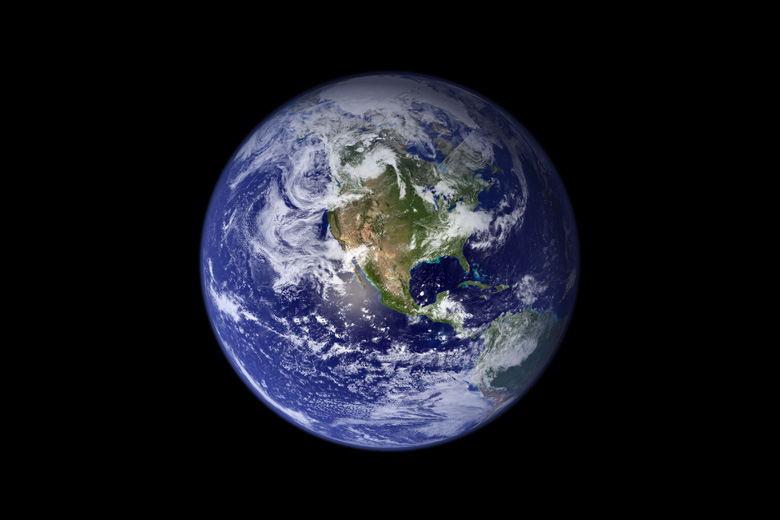
"Climate change" is the name given to the process by which weather conditions alter to such an extent that both the climate and the environment become significantly transformed.
The change, which normally takes place over a very long time period, typically produces colder or warmer conditions, and these have far-reaching impacts on many aspects of life, including flora and fauna.
There are lots of naturally occurring reasons why climate change happens, from long-term changes in the Earth's orbit around the sun to relatively short-term shifts, caused by, for example, periods of low solar activity, massive volcanic eruptions and fluctuations in the oceans' currents.
Natural cycles
For hundreds of thousands of years, Earth's climate has shifted in slow, predictable cycles, and one of the most significant relates to the planet's orbit around the sun. As it circles the sun, its trajectory subtly stretches and tilts. These shifts, known as Milankovitch cycles, after Milutin Milankovitch, the scientist who first identified them, alter the amount of sunlight that reaches Earth.
Over time, that small difference is enough to tip the planet into icy glacial ages or warmer interglacial periods. Over the past 740,000 years, there have been eight such glacial cycles, part of a pattern that has shaped landscapes and ecosystems for millions of years.
The Earth is currently in an interglacial period following the last ice age, which peaked around 20,000 to 26,000 years ago1. Then, ice sheets covered much of North America and northern Europe, and sea levels were at least 100 metres lower than they are today. According to the geological record, the next glacial cycle is likely to begin in around 10,000 to 11,000 years.
It's important to note that the climate changes we're discussing here are all natural ones that come around in cycles over very long periods of time. You may not realise it, but we are in a cycle now. However, due to the time frames involved, the process of natural change is barely perceptible.
What is global warming?
Another term often used is "global warming", which is different to climate change. However, the two terms are often conflated and used interchangeably, although technically they have different meanings.
We've examined naturally occurring climate change, which is happening right now. In addition, today, we are experiencing (and have been since the mid-19th century), a small but steady increase in surface temperature that is almost entirely due to human activities. This is what we call "global warming".
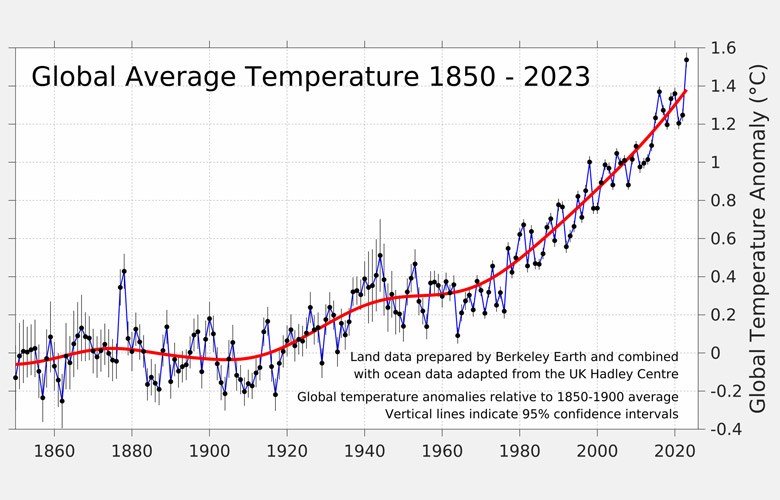
It's a very real consequence that we need to know about and should be concerned about. Not only because it is an entirely new phenomenon, but because the rate at which temperatures are changing, though relatively small, is unprecedented.
Furthermore, rising temperatures have knock-on effects that go beyond warmer weather. They are leading to more frequent extreme weather events, rising sea levels and changing ecosystems.
Why are temperatures rising?
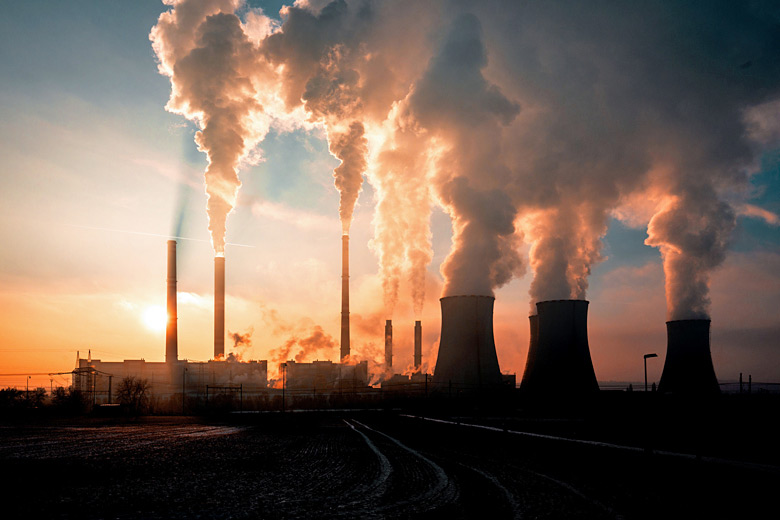
Earth has always cycled between colder ice ages and warmer intervals, but today's rapid warming has a different driver: us. Human activity, chiefly the burning of coal, oil and gas, has filled the atmosphere with what are known as 'greenhouse gases', such as carbon dioxide, methane and nitrous oxide.
These gases act like the glass of a greenhouse. Normally, about 30% of the solar radiation that warms the land and oceans is released back into space through a process known as 'outgoing longwave radiation'.
This is a crucial part of the mechanism that governs our planet's climate. So long as the amount of energy arriving from the sun is equal, on average, to the amount lost back into space, then the temperature of the Earth remains stable.
The problem is that outgoing longwave radiation is being negatively affected by the presence of greenhouse gases in the atmosphere, which trap part of that heat and send it back towards the surface. As the levels of these gases rise, less heat escapes and the planet warms.
We've understood the basics for a long time. In the mid-19th century, scientists, including John Tyndall and Svante Arrhenius, warned that extra carbon dioxide (CO2) could warm the Earth.
The first real evidence that this warming was already underway came in 1938, when British engineer Guy Callendar2 showed temperatures were climbing as carbon emissions increased. And in 1975, geochemist Wallace Broecker3 gave this trend a name that has stuck: global warming.
How much have temperatures risen?
Since the Industrial Revolution, roughly the middle of the 19th century, the Earth has witnessed a temperature rise of around 1.4°C to 1.5°C. This may not sound like a large amount, given that temperatures in major Western European cities can vary by more than ten times that amount between summer and winter.
However, the figure is significant because the difference in temperature between summer and winter is due to local variations that have occurred historically in the absence of global warming, so they are not relevant.
What is important here is that the baseline temperature is rising. On average, everywhere is getting warmer.
What are the main human causes of increased greenhouse gases?
Human activity has undoubtedly contributed to the volume of greenhouse gases in the atmosphere, which, as we've examined, has a knock-on effect on rising temperatures. Here, we consider three of the biggest culprits in what we, as humans, are doing to exacerbate the emission of greenhouse gases.
1. There's more carbon dioxide in the atmosphere
CO2 is a natural by-product of burning all types of carbon-based fuels. The massive increase in the consumption of fossil fuels (gas, coal and oil), partly due to the rapid rise in population since WWII and widespread industrialisation, has released more carbon dioxide into the atmosphere.
Quick facts:
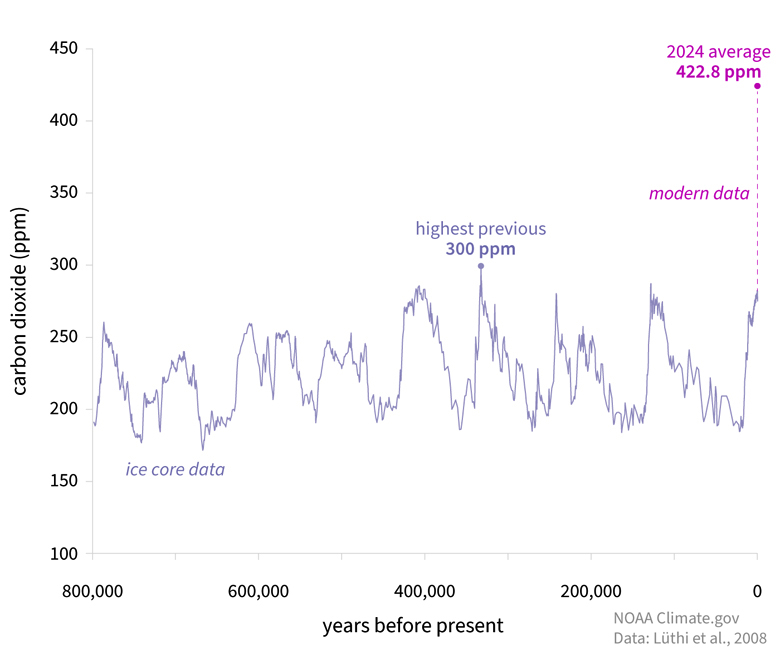
- CO2 emissions from human activities are now higher than at any point in our history: global CO2 emissions were 182 times higher in 2022 than they were in 1850, when the Industrial Revolution was underway4
- fossil fuel consumption has increased significantly over the past 50 years, around eightfold since 1950 & roughly doubling since 19805
- since the mid-20th century, annual CO2 emissions from burning fossil fuels have increased every decade, from close to 11 billion tons of carbon dioxide per year in the 1960s to an estimated 37.4 billion tons in 20246
- the annual rate of increase in atmospheric carbon dioxide over the past 60 years is 100-to-200 times faster than the increase that occurred at the end of the last ice age, 11,000-to-17,000 years ago6
2. Deforestation & warming oceans mean less natural absorption of CO2
With a rising population, the demand for agricultural land has led to a reduction in tropical forest cover. All types of vegetation need carbon dioxide, water, and sunlight to grow. Plants absorb CO2 through their leaves, which they convert with the help of water into glucose by a process known as photosynthesis; the waste product of this process is oxygen.
Did you know? In 1947, the planet had 15-to-16 million km2 (5.8 to 6.2 million miles2) of mature tropical forests. By 2015, it was estimated that about half of these had been destroyed.7
But with fewer forests, less carbon dioxide can be removed from the atmosphere, leading to a build-up in the air. It is estimated that up to 30% of human-produced CO2 emissions are still absorbed by forests each year.
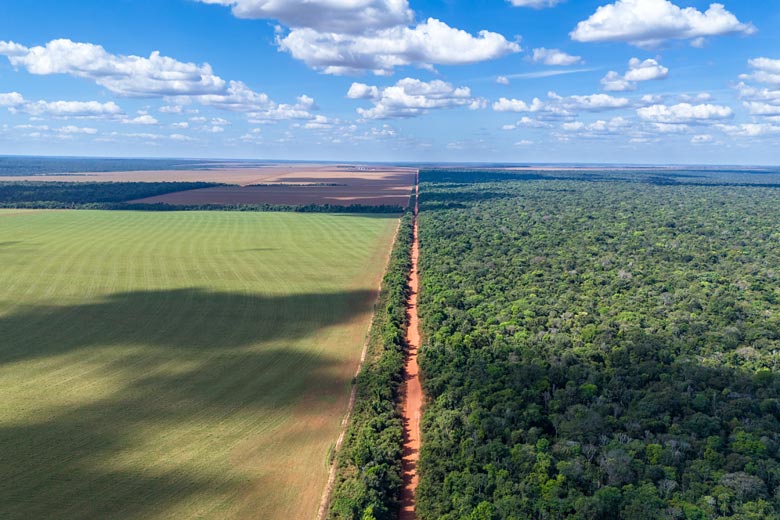
Meanwhile, at sea, it's believed that a further 30% of CO2 is absorbed by the oceans, where it dissolves in water. The greater part of the CO2 that is absorbed by the oceans is taken up by phytoplankton (a type of photosynthetic organism) on the surface, which, like plants on land, need sunlight and survive on photosynthesis.
Did you know? Scientists now think that phytoplankton absorb as much CO2 every year as all the forests on land.8
When they die, phytoplankton sink to the ocean floor, where, after millions of years, the carbon within them is eventually transformed into rock such as limestone.
So, if roughly 60% of the CO2 produced by human activity is absorbed by vegetation and the oceans, this not only proves their invaluability but still leaves around 40% floating around in the atmosphere.
3. Increased demand for food has led to high agricultural emissions
The rise in population has not only created a demand for land to grow food but also increased the demand for farmed livestock.
Today, agriculture is the second-largest emitter of greenhouse gases after the energy sector, most of which comes from methane produced by livestock such as cattle, goats, and sheep as a byproduct of their digestive processes.
Did you know? It's estimated that the amount of methane being produced by agriculture has tripled since the mid-20th century. In the 1950s, agriculture accounted for 2- to 3-billion tons of CO2 equivalent emissions annually; now, the figure is estimated to be around 9-to 10-billion tons annually.9
Global meat production has increased rapidly over the past 50 years; total production has more than quadrupled since 1961.
Interestingly, scientists have now discovered that changes in animal feed can reduce methane emissions, and they are also working on methods of capturing methane from animal manure to produce biogas as a renewable energy source. However, changes in agricultural methods on a global scale will take many years to implement.
Natural sources of carbon dioxide
There are, of course, natural sources of carbon dioxide. The ocean, for example, will both absorb CO2 and release it into the atmosphere depending on the relative quantities of CO2 present in both.
CO2 dissolves more easily in cold water than warm, so warm oceans are more likely to emit CO2, while cold oceans tend to absorb and retain more CO2 from the atmosphere. Other examples include:
- decomposing vegetation & carcasses release CO2
- all living mammals exhale small quantities of CO2
- some volcanoes emit CO2
- over time, the weathering of carbonate rocks such as limestone releases CO2
What are the knock-on effects of global warming?
It took until the second half of the 20th century for scientists to realise that rising temperatures did not just produce warmer weather. The secondary knock-on effects are far more serious, leading to more frequent extreme weather events, rising sea levels and changing ecosystems. Below, we examine the main effects of global warming.
More frequent extreme weather events
One of the most noticeable effects of relatively small increases in air temperature is that it leads to more extreme weather events, such as heatwaves, droughts, heavy rain and storms. These events occur because:
- warmer air can contain more moisture: a parcel of air can hold 7% more moisture for each 1°C rise in temperature; this means that potentially warmer weather can lead to more rainfall
- warmer seas can produce more violent or more frequent tropical storms, which are fuelled by warm water and this can threaten life & property
- changes in the temperature gradient (i.e. the difference between temperature in one part of the world & another; for example, between the poles & mid-latitudes) can lead to shifting or weakening of the jet-stream, meaning storms can move into unexpected areas or linger longer
- warmer conditions mean the major circulation systems that move warm air from the tropics towards the poles become larger & weaker; for example, in Europe, this means high-pressure systems that would normally be confined to North Africa spill into Europe, causing much drier conditions, which lead to drought & an increase in wildfires, simply because the vegetation is so much more combustible
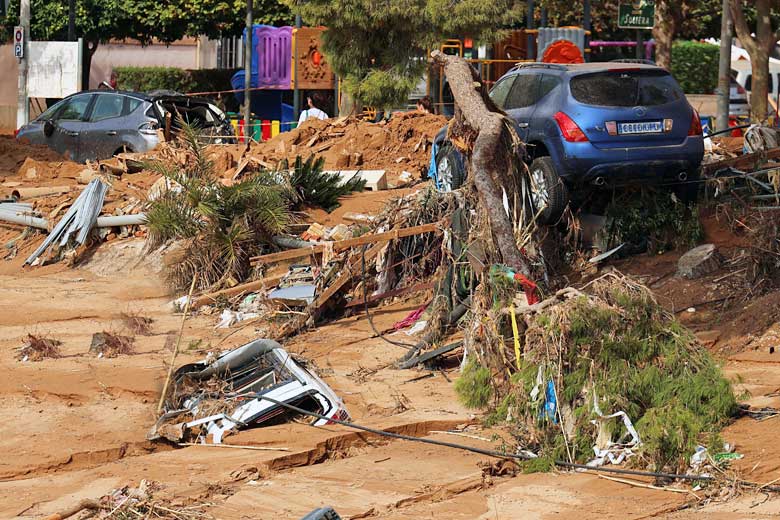
All of the above can lead to disruptions to people's lives and can also seriously adversely affect food production, farming and water supply, among other necessities.
Rising sea levels
There is often talk of rising sea levels, but not always the detailed follow-up of why this happens. Contrary to what you might assume, it's not just because of melting ice sheets and glaciers, although in recent years this has been an additional source of concern. It's also down to thermal expansion: simply, if you warm water, the volume of water increases.10
Did you know? According to the UK Met Office, sea levels rose by about 20 cm between 1901 and 2018, the largest increase in a century over the past 3,000 years.
It has become evident that the rise of sea levels is accelerating: the rate of sea level rise was ~1.3 mm/year over the period 1901 to 1971; this increased to ~1.9 mm/year over the period 1971 to 2006 and to ~3.7 mm/year over the period 2006 to 2018.
The effects of rising sea levels are fairly obvious, chiefly coastal inundation and erosion. Coastal cities are particularly at risk, but so are some whole countries, such as Tuvalu, Kiribati and the Maldives, whose populations live in places that are only a few metres above sea level.
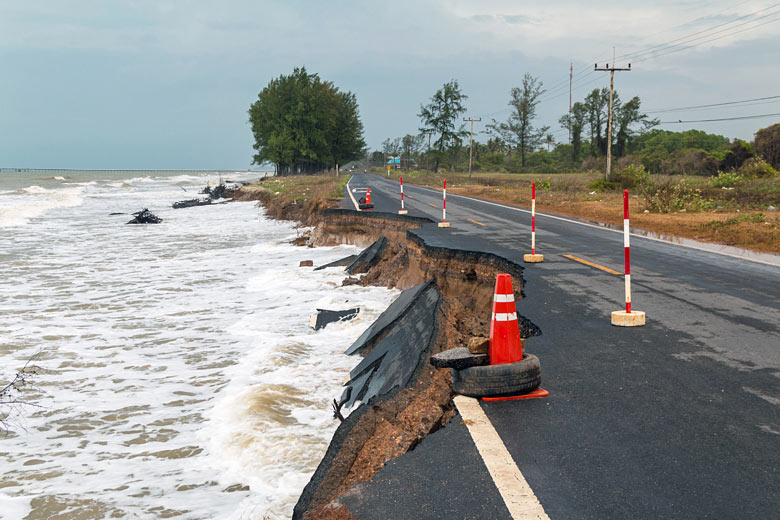
In addition, long-term changes resulting from glacier melt could have other serious consequences. In northern India, for example, millions of people depend on meltwater from the Himalayas to fill their rivers in the spring and early summer months before the onset of the monsoon. If this seasonal water source were to disappear, it could threaten food security in the area.
Changing ecosystems
Nature is always finely balanced, and it doesn't take much to tip it off balance to potentially disastrous effect. The impact of global warming on the world's ecosystems is one of the most precarious. Here, we break these down into three distinct areas across the Earth.
Ocean ecosystems
By far the greatest threat to ecosystems from global warming is to be found in the world's oceans.
In the tropics, for example, warming water is causing coral bleaching. This occurs when corals become stressed and expel the algae on which they depend. In the short term, corals can survive bleaching so long as water temperatures do not continue to rise. But if they do, most affected corals will likely die.
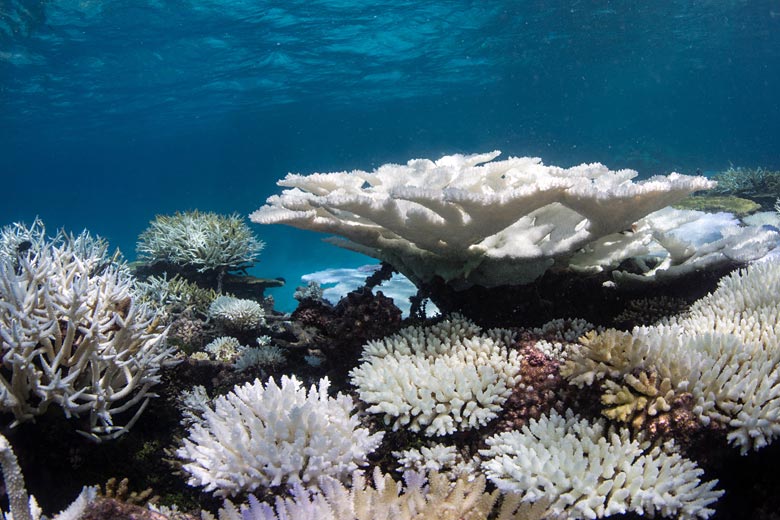
Did you know? The International Union for Conservation of Nature (IUCN)'s Red List 2024 stated that 44% of corals are under threat of extinction, up from around 33% in its 2008 assessment.11
Another major problem affecting the world's oceans is an increase in water acidity. The increasing amount of CO2 in the atmosphere that is being absorbed by the oceans (mentioned above) is beneficial in one way, as it removes it from the atmosphere; however, CO2 is also making ocean waters more acidic, as it lowers ocean pH. This makes it more difficult for all shell-forming organisms, including corals, to build calcium carbonate for their shell structures.
Did you know? Over the last 200 years, ocean water has become 30% more acidic, the fastest known change in ocean chemistry in the last 50 million years.12
If coral reefs and shellfish are declining globally, this greatly affects other marine species that depend on them for survival. Subsequent declines in fish stocks ultimately affect human populations that depend on fishing for their livelihoods or consumption.
Polar regions
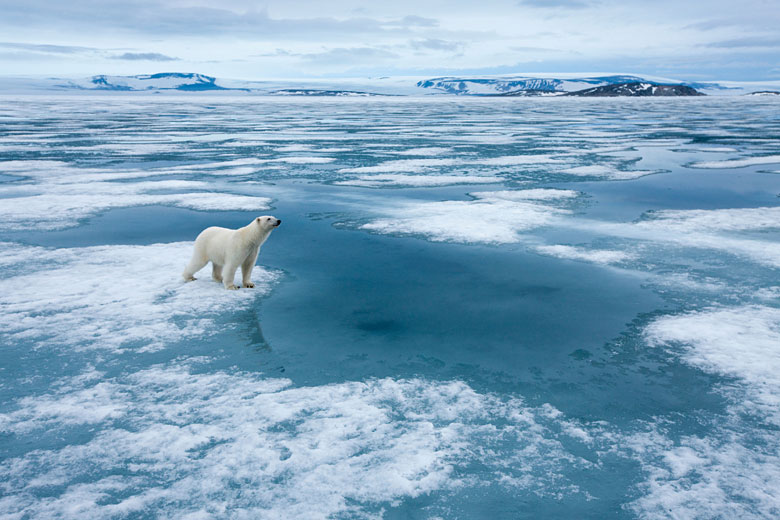
The Arctic is warming up to four times faster than the global average, partly because there is less ice to reflect solar radiation back into space, but also because there is more heat being transported from lower latitudes towards the Pole, and warmer air can contain more water vapour, which itself is a powerful greenhouse gas.
The permafrost (ground that remains frozen but is not ice13) is also melting in places, releasing large amounts of methane, another greenhouse gas. The result is changes in arctic habitats, including shifts in the distribution and numbers of animals that rely on sea ice, such as polar bears and seals. But the effects also extend to the bottom of the food chain, on which many marine species rely.
Meanwhile, in Antarctica, temperatures on the Antarctic Peninsula are rising at a similar pace to the Arctic because it is exposed to relatively warm seas to the east and west.
Elsewhere on the continent, the rate of change is far slower. For example, in East Antarctica, which makes up 70% of the continental landmass, the majority of the ice sheet, which is over three kilometres thick in places, sits on rock that is above sea level, so it is not at risk of melting from below. Plus, the surface of the ice is at least 3,000 metres above sea level, where average temperatures are the coldest on the planet, around -50°C to -60°C.
In West Antarctica, it's a very different story. In around 90% of this region, the ice rests on rock below sea level, making it susceptible to melting from below. It is experiencing some warming, but not as much as the Antarctic Peninsula.
Mountain ecosystems
As with the polar regions, mountain regions are warming faster than the surrounding lowlands. Changes in snow cover caused by warming are leading to shifts in vegetation patterns.
Species confined to high elevations also face shrinking suitable habitats as they are forced to move higher. Many mountain species cannot migrate further and are at increased risk of extinction.
Which countries are the main CO2 emitters?
Greenhouse gas emissions have grown steadily since WWII. Every year, more and more is being added to the atmosphere. In 1950, it was 6,000 billion tons per annum; by 2000, this had risen to around 26,000 billion tons, and by 2023 increased to 39,000 billion tons; an increase of over 50% since 2000.
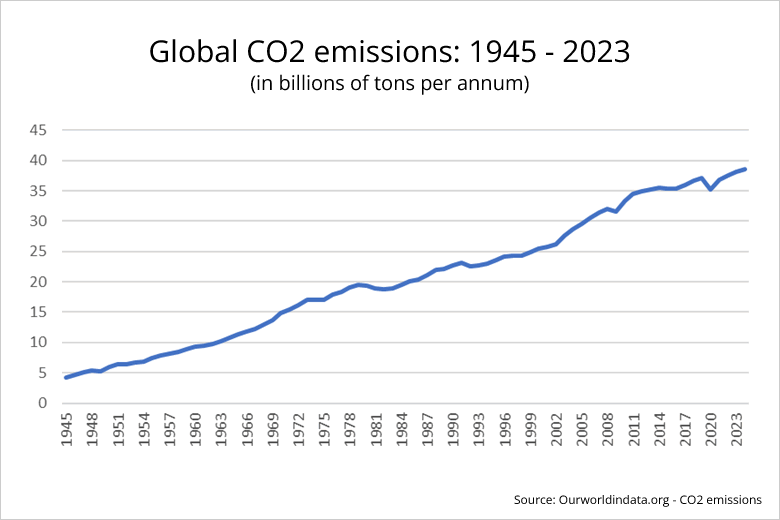
Today, over half of the world's CO2 emissions are produced by three countries: China, the US and India. Of these, China is by far the largest emitter, responsible for over a third of the global total and having increased its emissions by over 260% from 2000 to 2023.
About 40-to-45% of China's total CO2 emissions come from power generation, and the vast majority of that electricity is generated by coal-fired power plants.
Meanwhile, in the US, transportation, that's cars, trucks, aircraft and trains, is the largest source of CO2 emissions, producing about 35% of the total. Electricity generation comes a close second, accounting for about 30%.
Over in India, the energy sector is again the largest source of CO2 emissions, accounting for up to 45% of the country's total CO2 emissions, with over 70% of this coming from coal-fired power plants.
The following table shows carbon emissions by country, with percentage changes from 2000 to 2023 extracted from Wikipedia in January 2026
| Countries by carbon emissions | (millions of tons per year) | % change | ||
|---|---|---|---|---|
| Location | % of total | 2023 | 2000 | 2000-2023 |
| World | 100% | 39,023.94 | 25,725.44 | +52% |
| China | 34.0% | 13,259.64 | 3,666.95 | +262% |
| United States | 12.0% | 4,682.04 | 5,928.97 | -21% |
| India | 7.6% | 2,955.18 | 995.65 | +197% |
| European Union | 6.4% | 2,512.07 | 3,563.26 | -30% |
| Russia | 5.3% | 2,069.50 | 1,681.14 | +23% |
| Japan | 2.4% | 944.76 | 1,248.81 | -24% |
| Iran | 2.0% | 778.80 | 353.93 | +120% |
| International Shipping | 1.8% | 706.32 | 503.29 | +40% |
| Indonesia | 1.7% | 674.54 | 299.09 | +126% |
| Saudi Arabia | 1.6% | 622.91 | 265.24 | +135% |
| Germany | 1.5% | 582.95 | 871.74 | -33% |
| Canada | 1.5% | 575.01 | 543.04 | +6% |
| South Korea | 1.5% | 573.54 | 474.16 | +21% |
| International Aviation | 1.3% | 491.63 | 355.32 | +38% |
| Mexico | 1.2% | 487.09 | 396.71 | +23% |
| Brazil | 1.2% | 479.50 | 349.40 | +37% |
| Turkey | 1.1% | 438.32 | 227.05 | +93% |
| South Africa | 1.0% | 397.37 | 347.30 | +14% |
| Australia | 1.0% | 373.62 | 353.87 | +6% |
| Vietnam | 1.0% | 372.95 | 56.52 | +560% |
| Italy | 0.8% | 305.49 | 454.72 | -33% |
| United Kingdom | 0.8% | 302.10 | 551.68 | -45% |
| Poland | 0.7% | 286.91 | 313.02 | -8% |
| Malaysia | 0.7% | 283.32 | 130.78 | +117% |
| France | 0.7% | 282.43 | 401.21 | -30% |
The reason for China and India's large increases in carbon emissions since 2000 is that their economies have grown much faster than the rest of the world's during this period. They've expanded into manufacturing, construction, steel, cement, chemicals, and heavy industry, and have invested heavily in infrastructure such as roads and railways, not to mention building whole new cities in China.
Some countries in the developed world, such as Japan and those in Europe and North America, have managed to cut their emissions in recent years. For example, the United States decreased emissions by 21% between 2000 and 2023, and Japan by 24% over the same period. This is due in large part to the closure of coal-fired power stations. Natural gas produces far less CO2 per unit of electricity than coal.
Renewable energy sources such as wind and solar have also played a major part in cutting emissions. In 2024 in the UK, just over 50% of the country's electricity needs were met by renewable sources compared with less than 3% in 2000.14
There have also been energy savings; cars and other motor vehicles are now more fuel-efficient than in 2000, as are most power plants, appliances, buildings, and industrial processes.
Sources & further reading
- IERE, USA - When was the last ice age?
- WeForum - Connecting humans to global warming
- Columbia Climate School - Wallace Broecker, Prophet of Climate Change
- World Resources Institute - The History of Carbon Dioxide Emissions
- Our World in Data - Fossil fuels
- Climate.gov - atmospheric carbon dioxide
- Wikipedia - Deforestation
- Bennington College - The Ocean's Invisible Forest
- Feed & Additive - Sustainable Livestock Farming: Progress since 1950
- Met Office - Past and future sea level rise
- IUCN, Netherlands - Red List: Over 40% of coral species face extinction
- Smithsonian - Ocean acidification
- Met Office - Permafrost: a terrain under threat
- UK Government - Department for Energy Security & Net Zero - UK energy in brief 2025
Be inspired
Get your weekly fix of holiday inspiration from some of the world's best travel writers plus save on your next trip with the latest exclusive offers
We promise not to share your details
Explore holiday destinations
- Beach holidays
- City breaks
- Family holidays
- Half term holidays
- Spring holidays
- Summer holidays
- Autumn holidays
- Winter sun holidays
- Honeymoons
- Coolcations
- Compare places
- Ski resorts
Save with latest deals & discounts
- Holiday offers
- Top travel brands
- Airlines & flights
- Discount hotels
- TUI
- Jet2holidays
- Neilson
- Marella Cruises
- Holiday Extras
- Pierre & Vacances
- Caledonian Travel
- Club Med
Airport parking
- Manchester Airport
- Stansted Airport
- Bristol Airport
- Luton Airport
- Birmingham Airport
- Edinburgh Airport
- Gatwick Airport
- Glasgow Airport
- Newcastle Airport
Airport lounges
- Manchester Airport
- Birmingham Airport
- Bristol Airport
- Edinburgh Airport
- Glasgow Airport
- Heathrow Airport
- Newcastle Airport
- Stansted Airport
- Gatwick Airport